
Biography
Click Here to Download Jeannie's Full Length Bio
Click Here to Download Jeannie's Condensed Bio
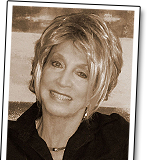
Jeannie Seely - Miss Country Soul
by Ron Harman
On the night of September 16, 1967, Jeannie Seely marked an important milestone in her music career by joining the world-famous Grand Ole Opry. The distinctive-voiced artist referred to as "Miss Country Soul" became the first Pennsylvania native to become a member of the Opry which began back in 1925. As of February 2025, Jeannie has made 5,397 Opry performances, more than any other artist in the Opry's 100-year history.
Jeannie emphatically states that it's still a thrill and an honor each time she performs on the Opry stage. "I feel very fortunate to be part of the Opry tradition," the Grammy-winning vocalist says, "and I am truly indebted to all the wonderful fans who have supported me over the years."
Jeannie Seely is among a select group of country artists who have scored chart-topping hits as a solo artist, as a duet partner, and as a songwriter. Among female entertainers in country music, she is the oldest still actively recording and performing.
Born on July 6, 1940, in Titusville, Pennsylvania, Jeannie grew up as the youngest of Leo and Irene Seely's four children. She was raised in the family's two-story farmhouse along a dirt road outside of nearby Townville, a community of about 300 residents located in the northwestern corner of Pennsylvania, some 625 miles from the Opry House in Nashville.
Jeannie's interest in music was influenced strongly by her parents. Her father Leo Seely worked hard on the family's farm and at a Titusville steel mill but found time on weekends to play the banjo and call local square dances. Irene Seely would sing with her daughter every Saturday morning while the two baked bread together.
"I grew up in a time when all the neighbors gathered together to help each other get the hay in and that kind of thing," recalls Jeannie. "It seemed like everybody back in the country played guitars and fiddles, and when we got together there was always pickin' and singin'."
When she was barely tall enough to reach the dial on her family's big Philco console radio, Jeannie was tuning in the Grand Ole Opry on radio station WSM 650. At age 11, she began singing for a Saturday morning radio show on Meadville station WMGW. "I can still remember standing on a stack of wooden soda cases because I wasn't tall enough to reach the unadjustable microphones," she laughs. By age 16, Jeannie was performing on television station WICU in Erie.
Jeannie recalls many Saturday nights as a teenager when she would sit in her family's car, eat popcorn, and listen to the Grand Ole Opry while her parents played cards at the homes of friends. "I also remember looking forward to attending country music shows at a place near Franklin called Hillbilly Park," says Jeannie. "They would do an afternoon and an evening show. Mother would bake a chicken and fix up a picnic basket, and we'd just go there and spend the whole day and the evening. I was always on the ground right in front of the front row, looking up at the stage."
At Hillbilly Park Jeannie had the opportunity to see performers like Bill Monroe and Ralph Stanley. "And I still have the 8x10 photos I bought and had autographed there by stars like Jean Shepard, Little Jimmy Dickens, and Wilma Lee and Stoney Cooper," she adds. "I was very blessed to later become friends with those Opry legends."
Jeannie was a cheerleader, majorette, and honor student while attending Townville High School, and she sang at local amateur contests and began performing at weekend dances throughout northwestern Pennsylvania. "Back then a lot of people made fun of me because I sang country," she admits today. "In those days calling somebody 'country' was actually a put-down." Jeannie remembers how the residents of tiny Townville didn't believe that anyone, especially a female, could make a living by singing or writing songs. "Some people didn't even think it was right for a girl to be singing with a band at dances," she remembers.
Following high school graduation in 1958, Jeannie worked for three years at the Titusville Trust Company. Initially hired as a stenographer at the bank, she was later promoted to a secretarial position for the bank's auditor. During this period Jeannie continued her education by completing night classes that were conducted by the American Institute of Banking in Oil City. "Those courses in subjects like business finance and law were beneficial even later in my music career," Jeannie says. Both the local and national American Institute of Banking organizations have since made Jeannie an honorary lifetime member for her efforts in promoting the name and spirit of the organization.
Adopted from the title of a Thomas Wolfe novel, there's an old adage that states, "You can never go home again." At age 84 in the summer of 2024, Jeannie Seely did return home again when new "Home of Jeannie Seely" signs were unveiled in Townville. The ceremony was held at the Townville Fire Station where decades earlier Jeannie had first performed in front of an audience. "It was so wonderful to be back in my hometown," she says. "As I have said so many times throughout my career, every time I hear from folks back there, it always makes me feel special."
Jeannie has served as the producer for the bluegrass group Cutter & Cash and The Kentucky Grass, and at the 2024 ceremony in Jeannie's hometown they performed her song "Farm In Pennsyltucky", a 1973 charted Billboard record which Jeannie wrote based upon sayings she recalled hearing while growing up on her family's farm.
Jeannie unveiled the road signs which were placed on PA Route 408 at each end of the borough. The signs read: "Home of Jeannie Seely, Grammy Awarded Grand Ole Opry Legend, Class of 1958." While returning to her hometown area, Jeannie also stopped by the Titusville Trust Company, the bank where she worked for three years while singing at local clubs like the Elks and American Legion.
At age 21, Jeannie packed everything she could into her car, shipped the rest to "General Delivery, Los Angeles", and headed west. She initially took a job at a Beverly Hills bank but left it after a year to take a secretarial position for half the money at Liberty and Imperial Records in Hollywood. With a foot in the door of the music business, she began writing songs for Four Star Music and became a regular act, along with an unknown Glen Campbell, on the "Hollywood Jamboree" television series.
Jeannie's songwriting led to her own recording contract on Challenge Records. A couple regional hits and a West Coast tour resulted, and in 1964 Jeannie received the "Most Promising Female Artist" award from the Country and Western Academy which later became the Academy of Country Music (ACM). A young songwriter visiting California named Hank Cochran was impressed with Jeannie's talent and suggested she move to Nashville.
Upon the encouragement of singer Dottie West who recorded one of her songs, Jeannie finally did move to Nashville in the fall of 1965. "When I arrived in town, I only had $50 and a Ford Falcon to my name," she recalls. "Within a month though, Porter Wagoner hired me to replace Norma Jean as the female singer for his road show and syndicated television series."
Initially turned down by every record label in town, Jeannie finally got the big break she needed when a recording contract was offered by Monument Records. On March 12, 1966, she went in the studio and recorded a Hank Cochran ballad titled "Don't Touch Me." Shortly thereafter the song debuted on the country music charts where it stayed for over five months. Although it remained at the No. 2 position for three weeks on Billboard, the record went to No. 1 on other major charts including Cashbox and Record World. It was also a crossover hit on the national pop charts.
Today "Don't Touch Me" is considered a standard in country music. Jeannie's recording of the song was ranked at No. 97 in the book titled Heartaches By the Number: Country Music's 500 Greatest Singles written by David Cantwell and Bill Friskics-Warren. The book was published by the Vanderbilt University Press and the Country Music Foundation Press. Jeannie notes that Hank Cochran wrote "Don't Touch Me" in her dressing room but adds, "I actually helped write the bridge because at the time Hank was drinking and eventually he couldn't hold the guitar. So I took the guitar and I'm like, 'Is this what you're hearing?' So I pretty much wrote the bridge on it."
"Don't Touch Me" was also included in The Stories Behind Country Music's All-Time Greatest 100 Songs written by Ace Collins and published by Boulevard Books. The author writes, "Cochran's 'Don't Touch Me' has stood the test of time like few other works. Hauntingly beautiful, poetry set to meter, this composition merits particular praise for the exquisite manner in which it relates its story of love, doubt, and commitment." The book describes how Buck Owens desperately wanted the song that Jeannie ultimately recorded and made a hit.
On May 28, 1966, Jeannie made her first guest appearance on the Grand Ole Opry. She received "Most Promising New Artist" awards that same year from all the national trade publications including Billboard, Cashbox, and Record World, as well as from polls of country music fans and radio DJs across the country.
On March 2, 1967, the National Academy of Recording Arts & Sciences honored Jeannie with the 1966 Grammy Award for the "Best Country Vocal Performance by a Female". Edging out friends and fellow nominees Loretta Lynn ("Don't Come Home A Drinkin'"), Dottie West ("Would You Hold It Against Me"), Connie Smith ("Ain't Had No Loving"), and Jan Howard ("Evil On your Mind"), Jeannie Seely became only the third female country artist to receive the coveted Grammy. She accepted her award from Chet Atkins.
With a successful breakthrough hit, Jeannie found herself traveling from coast to coast for her own concert appearances which forced her to leave Porter Wagoner's show. New opportunities, however, included concert and television appearances with the legendary Ernest Tubb. On the liner notes for one of Jeannie's early albums, the legendary Tubb wrote, "She puts heart and soul into every ballad she sings. Whether a new song or an old one, when Jeannie sings it, it becomes 'Jeannie's song'."
In September of 1967, Jeannie fulfilled her lifelong dream by joining the Grand Ole Opry. She remembers her Opry induction, attended by her parents from Pennsylvania, as "a very emotional night." "I started crying," she recalls, "and then I encored and that was even worse." Often referred to as the "Mother Church of Country Music", the Ryman Auditorium in downtown Nashville was home to the Opry when Jeannie became a member. Although hot in the summer and drafty in the winter, Jeannie says the Ryman had a magic all its own. She fondly recalls sharing a crowded dressing room, which was actually the ladies' restroom, with fellow performers like Minnie Pearl, Jean Shepard, Dolly Parton, and Barbara Mandrell.
After 31 years at the Ryman, the Grand Ole Opry moved on March 16, 1974, to the new 4,400-seat Opry House on the grounds of the Opryland theme park. At the much-publicized grand opening show which was broadcast on over 1,300 radio stations worldwide, special guest President Richard Nixon told the audience, "Some girls have looks but can't sing. Others can sing but don't have looks. Jeannie Seely's got them both." That quote subsequently appeared in newspapers across the country.
Known throughout her career as an individualist, as well as for her infectious humor, Jeannie is widely recognized for changing the image of female country performers. She is credited for breaking the "calico curtain" by being the first woman to wear a miniskirt on the Grand Ole Opry stage. "I really didn't think anything of it at the time, but it did cause quite a stir," she laughs. "The Opry manager even called me into his office."
In their book Finding Her Voice: The Saga of Women in Country Music, authors Mary Bufwack and Robert Oermann wrote, "Jeannie's frank talk, striking intelligence, free-spirited lifestyle, and deeply moving vocals have long set her apart from most female country stars. When she arrived in Nashville in 1965, women were still expected to portray the submissive country sweetheart. Jeannie blazed a nonconformist trail from the moment she hit the Opry in her miniskirt."
A string of hit records in the late '60's and early '70's solidified Jeannie's reputation as a country torch singer and earned her the nickname of "Miss Country Soul", a title still frequently used today. Country Music Hall of Fame member Marty Robbins once said, "Jeannie Seely is one of the great stylists of our time." Jeannie made frequent guest appearances on television shows like "Hee Haw" and "That Nashville Music," and on March 22, 1970, Jeannie was a featured guest on "Glen Campbell's Goodtime Hour" on CBS-TV.
Working with distinguished producers like Fred Foster and Owen Bradley, the blonde, blue-eyed singer recorded over a dozen albums on the Monument, Decca, and MCA labels. Jeannie placed more than two dozen singles on Billboard's national country music charts over 13 consecutive years from 1966 through 1978. Among the hits were "It's Only Love," "A Wanderin' Man," "I'll Love You More," "He Can Be Mine," "Welcome Home To Nothing," "Little Things," and "When It's Over." In 1973 Jeannie transformed the hobo lament "Can I Sleep In Your Barn Tonight Mister?" into the Top 10 hit "Can I Sleep In Your Arms?". The following year she adapted the Appalachian ballad "Come All You Fair And Tender Ladies" into another hit single titled "Lucky Ladies."
For several months Jeannie traveled on military tours throughout the Far East and Europe, and for two years Jeannie served as a radio disc jockey on her own Armed Forces Network Show. Decades later in 2018, Jeannie began hosting her own weekly show called "Sundays with Seely" on the SiriusXM Willie's Roadhouse channel. Her show is still heard on Channel 61 of SiriusXM, and every Sunday Jeannie plays classic country music, tells captivating stories, and engages in casual conversations with special guests who often visit with her backstage at the Grand Ole Opry.
A 1969 duet recorded with fellow Opry member Jack Greene titled "Wish I Didn't Have to Miss You" went to the top of the charts and launched one of the most successful duos and road shows in country music history. Nominated for numerous Country Music Association (CMA) awards and a Grammy, Jack Greene and Jeannie Seely toured together for over ten years, performing everywhere from New York's Madison Square Garden to London's Wembley Arena. The duo changed the format of "package shows" and were considered forerunners in opening doors and bringing country music to wider audiences around the world. Through a special invitation from the White House, they were named Goodwill Ambassadors to the annual United Nations Concert.
Other artists recording Jeannie's songs range from Irma Thomas, the "Soul Queen of New Orleans," to Rhonda Vincent, the "Queen of Bluegrass," as well as from Tex Williams to Chris LeDoux, and from Boyz II Men to Seal. Jeannie's composition titled "Yours" was named "Song of the Year" at the 2022 Arkansas Country Music Awards.
For several years Jeannie was married to Hank Cochran, the writer of songs like "Make The World Go Away," "She's Got You," "I Fall To Pieces," "The Chair," and "Ocean Front Property." The marriage - the first for Jeannie but the fourth for Hank - finally ended in a divorce. In 1977 the career of Jeannie Seely almost ended abruptly when she was involved in a near fatal automobile accident that left her with serious multiple injuries. "You know, it sounds like a cliche, but it's true that your perspective changes when you have a close call," she reflects. "What you took for granted you come to appreciate more." It was with the help and support of best friend Dottie West that Jeannie was able to recover and get back on her feet.
In the early 80's, Jeannie performed as the opening act for friend Willie Nelson's concert dates across the country. She also appeared in Willie's successful Honeysuckle Rose movie and sang on the soundtrack recording, a contribution which earned her a platinum album. Also in the 80's, Jeannie became the first female artist to regularly host half-hour segments of the Grand Ole Opry. Those hosting duties began on January 19, 1985, when she was called upon as a last-minute replacement for Del Reeves, the scheduled host, who was caught in a rare Nashville snowstorm.
During the 80's Jeannie starred in several major stage productions. She played Jean Shepard's daughter and Lorrie Morgan's mother in the 1986 country musical called Takin' It Home. In 1988 she portrayed "Miss Mona" in a sold-out run of The Best Little Whorehouse in Texas, and the following year took a nonmusical role as the title character in Everybody Loves Opal.
In 1988 Jeannie published her own book, Pieces of a Puzzled Mind, containing a collection of Jeannie's unique witticisms. The popular book was out of print for several years, but Jeannie republished the book in 2012 and it is still available today on her website. Also known as "Seely-isms" around Nashville, Jeannie notes that many of the sayings actually began as song titles or opening lines. "Country music has made so many of my dreams come true," Jeannie wrote in the book, "I just wish someone would have warned me about the nightmares."
In the 1990's, Jeannie portrayed lead singer Danny Shirley's mother in Confederate Railroad's chart-topping music video for the song "Trashy Women," and later she was featured in the video for fellow Opry member Brad Paisley's hit "Wrapped Around." Throughout the 80's and 90's, Jeannie appeared frequently on shows like "Nashville Now," "Crook and Chase," "Music City Tonight," "Grand Ole Opry Live," "You Can Be A Star," "Family Feud," and "Prime Time Country." She served as a regular host of "Opry Backstage," interviewing everyone from new and upcoming acts to superstars like Garth Brooks.
Nashville music critic Robert K. Oermann wrote in his 2003 book Finding Her Voice: Women In Country Music, "With her chin-out, tough/tender, heart-of-gold manner, Jeannie Seely remains one of country's most completely modern female personalities." Through the years Jeannie has performed many times on the Grand Ole Opry Cruise, Country's Family Reunion and Larry's Country Cruise, and the Country Music Cruise, and for several summers she performed at the Dollywood theme park. She was part of a successful overseas tour with the "Grand Ladies of the Grand Ole Opry" as wells as her own tours of Ireland in 2008 and 2009.
For three months Jeannie portrayed the role of Louise Seger during a successful run of the Always, Patsy Cline musical in Atlantic City. Along with friends Jan Howard and Rita Coolidge, Jeannie filmed the heart-warming motion picture Changing Hearts which featured Faye Dunaway, Lauren Holly, Tom Skerritt, and Ian Somerhalder. Over a period of three years, Jeannie and fellow country singer Helen Cornelius starred in successful runs of the musical production Could It Be Love, including a performance at the historic Ryman Auditorium. Jeannie was also featured in a Nashville performance of The Vagina Monologues with fellow entertainers Pam Tillis and Kathy Mattea.
In 2006 Jeannie received the Songwriter of the Year Award from the R.O.P.E. (Reunion of Professional Entertainers) organization, and in 2007 she received R.O.P.E.'s Entertainer of the Year Award. In 2009 Jeannie was honored with the prestigious Colonel Aide-de-Camp Award presented by Tennessee Governor Phil Bredesen. The award recognizes citizens for meritorious public service with the distinction of being included in the Honorable Order of Tennessee Colonels.
Jeannie sang with fellow Opry member Ralph Stanley on Clinch Mountain Sweethearts which received an International Bluegrass Music Association Award for "Recorded Event of the Year" as well as a Grammy nomination for "Bluegrass Album of the Year." In 2009, an interview conducted by Rik Paleri with Jeannie at the Grand Ole Opry for Rik's Songwriters Notebook television show was permanently entered into the archives of the Library of Congress in Washington, DC.
Since the 1990's, Jeannie has lived close to the Grand Ole Opry in a quaint and comfortable home along the Cumberland River that she renovated and decorated herself. A major setback occurred in May 2010 when Jeannie lost her home, car, and personal belongings in the devastating Nashville flood. Jeannie decided to rebuild her home and returned to it around the same time the Grand Ole Opry returned to the Opry House, her second home, which was also damaged.
On November 20, 2010, Jeannie married Nashville attorney Eugene (Gene) Ward who at one time represented country artists like Webb Pierce, Ernest Tubb, Lefty Frizzell, and Faron Young. In September 2024, Gene turned 92 and was recognized by the Mayor of Nashville, Freddie O'Connell, for his outstanding contributions to the state of Tennessee and his unwavering dedication to public service, leadership, and community. Sadly, Gene Ward passed away in December 2024.
In 2018, Jeannie was inducted into the Music City Walk of Fame which represents all genres of music. Jeannie is honored on the walkway among a current total of 109 individuals or groups such as Elvis Presley, Dolly Parton, Roy Orbison, Little Richard, Brenda Lee, Garth Brooks, Jimmy Buffett, Jimi Hendrix, Kenny Rogers, and Trisha Yearwood (who inducted Jeannie). Country artist and Opry member Carly Pearce attended the ceremony and later shared a display with Jeannie in the 2019 "American Currents" exhibit at the Country Music Hall of Fame and Museum located across the street from the walkway. Carly stated, "Jeannie Seely embodies everything it means to be a powerful woman in the music industry. She has remained classy, poised, and relevant through decades, and continues to inspire the generation of females to this industry including myself."
In June of 2019, Jeannie was recognized for her contributions to the entertainment industry by the Donelson-Hermitage Chamber of Commerce Women in Business. The inaugural "Standing Ovation Award" was bestowed to Jeannie at the Influencing Women Awards Gala, and the annual award is now named in her honor. In December 2019 Jeannie received Lincoln Memorial University's most prestigious recognition, an Honorary Doctor of Arts Degree, for her many groundbreaking accomplishments in the music industry as well as for her support and encouragement of new talent.
Jeannie's recordings span from her Top 10 Billboard album The Seely Style to her most recent album on Curb Records titled An American Classic. That project includes her third duet with friend Willie Nelson, as well as collaborations with Bill Anderson, Lorrie Morgan, Vince Gill, Rhonda Vincent, Ray Stevens, Steve Wariner, Waylon Payne, and The Whites. Jeannie's singles "If You Could Call It That" and "So Far So Good" appeared on the Music Row national chart in 2021 and 2022, an incredible feat for an artist in her 80s.
Jeannie was featured on The Flat River Band's holiday song titled "Christmas Time" in 2023, and in 2024 she recorded a duet with Charlie McCoy for his upcoming album project. She has recently co-written new songs with many of Nashville's most talented songwriters. In October 2024 Michelle Wright released a new Christmas album which includes a song she co-wrote with Jeannie and Victoria Shaw titled "Let's Make Memories For Christmas." In 2024 Jeannie collaborated with songwriter Conrad Fisher for a song titled "Take Me Back To Pennsylvania" which celebrates the love for their home state.
In May 2022, Jeannie was the honored recipient of the Legacy Award at The Nashville Women in Film & Television WIFT ALICE Awards Ceremony and Gala Dinner. The award, named after Alice Guy-Blache, the world's first female director, is given to women in the entertainment industry who exemplify the spirit of this extraordinary woman.
Country music has a history that is deeply rooted in values, patriotism, and lyrics that tell the truth about life. Jeannie Seely has exemplified those values through her performances, through her songwriting, and through her efforts to "give back." Throughout her career Jeannie has assisted in raising funds for numerous organizations such as Music Health Alliance, the Opry Trust Fund, and the Nashville Musicians Emergency Relief Fund. On the Opry stage in October 2022, Jeannie was surprised by a proclamation and honorary lifetime membership to the Nashville Musicians Union. She was only the third individual to receive that status after Glen Campbell and Charley Pride.
Jeannie appeared on the nationally televised Country Music Association (CMA) Awards Show in November 2022 alongside hosts Luke Bryan and Peyton Manning. The following year in 2023, Jeannie was awarded the CMA's prestigious Joe Talbot Award for her outstanding leadership, unwavering commitment, and dedicated contributions to country music's tradition and values. The Joe Talbot Award was created and bestowed posthumously to its namesake, Joe Talbot, a lifetime member of the CMA Board of Directors. Jeannie became the twelfth recipient of the award, and in addition to Joe Talbot the other honorees are Ken Burns, Dayton Duncan, Charlie Monk, Janette Carter, Kitty Moon Emery, Merle Haggard, Alan Jackson, George Jones, Louise Scruggs, and Marty Stuart.
When the Grand Ole Opry commemorated the 50th anniversary of the Opry House on March 16, 2024, Jeannie Seely - celebrated for her wit and spontaneity - stunned the crowd by stepping onto the stage in a midriff-baring replica of the iconic outfit she first wore fifty years earlier at the inaugural show of the new Opry House in 1974. Her recreation even included the same 70's hairstyle. That night Jeannie exclaimed, "There's really no way I can express my appreciation for this event - but to know the Opry finally got a home of her own, and that I have been fortunate enough to share it for 50 years, is one of the most joyful things in my life and career!" That night Jeannie performed "Don't Touch Me," which she sang at the opening of the Opry House in 1974, along with a crowd-favorite song she wrote titled "Who Needs You."
In July of 2024, Jeannie released the single "Suffertime" for download and streaming on digital platforms. The audio recording was accompanied by a music video as well as a 40-minute documentary, both available on Jeannie's YouTube channel. "Suffertime" was recorded at historic RCA Studio B where Jeannie's first Nashville session was held. Jeannie established a new record as the vocalist with the longest timespan (60 years) between recording sessions at the historic studio on Music Row. "I accidentally came upon 'Suffertime,' one of my favorite songs that Dottie and Bill West wrote and one which Dottie recorded as an album cut in 1966," explains Jeannie. "We pulled it down to country blues and then decided to record it at historic RCA Studio B where Dottie herself recorded."
Jeannie's recording of "Suffertime" was produced by fellow Opry member Steve Wariner. The musicians on the session were Country Music Hall of Fame members Charlie McCoy (harmonica) and Eddie Bayers (drums), along with Opry musicians Randy Hart (piano and session leader), Danny Davis (bass), Dug Grieves (guitar), Eddy Dunlap (steel guitar), and Ryan Joseph (fiddle). Backing vocals were provided by Opry singers Marty Slayton, Mica Roberts, Rod Fletcher, and Tony King.
In the summer of 2024, Jeannie was honored with a new display in the Country Music Hall of Fame and Museum as part of their permanent "Sing Me Back Home" exhibition. Seely's display includes a green dress which Jeannie herself embellished with a sequined musical staff and note, and then wore early in her career including appearances on Porter Wagoner's show. The display also includes Jeannie's 1966 Grammy Award for "Best Country & Western Vocal Performance, Female" along with an issue of the "Thailand Cryer" from the Nakhon Phanom Royal Thai Air Force Base in Thailand where Jeannie performed during a tour of military bases in Japan and southeast Asia to entertain American troops at the height of the Vietnam War.
For many years Jeannie has served as the co-host for the annual awards program for SOURCE, a nonprofit organization seeking to unify women executives and professionals that work in all facets of the Nashville music industry. In August 2024 Jeannie was honored with the esteemed Jo Walker-Meador Lifetime Achievement Award at the SOURCE Hall of Fame Awards in recognition of her numerous career achievements and significant contributions to the music industry. Jeannie joined a small and elite group of previous Lifetime Achievement Award recipients: Jo Walker-Meador (2004), Brenda Lee (2006), and Frances Preston (2010).
In September 2024, Jeannie was named the Artist Ambassador and Honorary Chair of Music for Seniors' inaugural "Lighting Up Lives" campaign, a month-long awareness and fundraising effort that aims to highlight the impact of music on the health and happiness of older adults in Tennessee. Music for Seniors connects talented local musicians with older adults through live, interactive music programs. At the Soho House Nashville Jeannie performed at "An Evening with Jeannie Seely and Friends" which benefited the Music for Seniors organization.
Following Jeannie's 5,381st performance on the Opry stage in September 2024, the "Jeannie Seely Interchange" was dedicated at the Briley Parkway exit to the Grand Ole Opry House. Now as the thousands of visitors make their way to and from the venue, they will be reminded of the incredible legacy and impact that Jeannie Seely has had on the Opry and Nashville itself. "To be recognized by the entire state of Tennessee is overwhelming," said Jeannie. "Thank you so much for naming the interchange at the entrance to the Grand Ole Opry in my honor. Hopefully, this will serve as one more sign of welcome to the folks who visit Nashville and support our music industry. I'm so grateful."
A feature story on Jeannie appeared in the January/February 2025 issue of American Songwriter magazine. Author Annie Reuter began the article by stating, "Jeannie Seely never set out to break any rules; she simply pursued her passion: writing and singing country music. Along the way, she shattered the glass ceiling for women in the genre, and her indelible impact remains today."
In March 2025, Jeannie Seely and Cutter & Cash and The Kentucky Grass were featured guests on an episode of the popular The Malpass Brothers Show airing on RFD-TV. The show was filmed at the Cowboy Channel/RFD-TV Studio in the historic Fort Worth Stockyards of Fort Worth, Texas.
Also in March 2025, Jeannie attended the unveiling of her new display in the rebranded Legends of Country Music Museum located close to the Grand Ole Opry House in Nashville. A large image of Jeannie now appears on the front entrance to the museum, along with images of five other country legends including Dottie West. The paintings were created by talented artist and Jeannie's friend Tess Frizzell, granddaughter of Dottie West and daughter of Shelly West.
In March 2025 Sony Music Publishing Nashville celebrated Jeannie during Women's History Month by releasing three reimagined versions of her songs as collaborations with rising female artists. The releases were "Let's Get Together" with Mae Estes, "Who Needs You" with Hannah Dasher and Tiera Kennedy, and "Anyone Who Knows What Love Is (Will Understand)" with Madeline Edwards. "Let's Get Together" was a previously unreleased song written by Jeannie and Glen Campbell that was recently discovered in Sony's tape room.
Rusty Gaston, CEO of Sony Music Publishing Nashville stated, "We are honored to represent Jeannie Seely and her incredible catalog of songs. She is a genre-defining artist and songwriter who has continued to be one of the greatest mentors across multiple generations of country music. This project showcases our team's unique ability to bring value to our songwriters in innovative ways, and we are grateful for Jeannie's partnership on these exciting new releases."
A member of SAG-AFTRA since 1963, Jeannie served on the Board of Directors of SAG-AFTRA Nashville for 30 years. In April 2025, SAG-AFTRA named the Studio Space in their office on Music Row in honor of Jeannie Seely. Her photo is now permanently displayed there.
Throughout her career spanning seven decades, Jeannie has spearheaded efforts to support and enhance women's roles in the music industry. Instrumental in instilling an atmosphere of fellowship and camaraderie at the Grand Ole Opry - and in any music circle she enters - Jeannie connects with artists, musicians, songwriters, and industry personnel from all generations and backgrounds. She's welcomed and mentored countless newcomers to the music business and been a longtime advocate for artists' benefits and rights.
As a trailblazer, an icon, and the oldest actively working female entertainer in country music, Jeannie continues her roles as a performer, songwriter, recording artist, producer, and host. And she continues to delight fans at the Grand Ole Opry where she has made an indelible mark for performing more times than any other artist in the Opry's history.
Jeannie Seely |
Jeannie Seely Website |
Send Jeannie an E-mail.
©2002 All Rights Reserved